San Francisco Rental Market Insights | Q2 2026
By: Lauren Rios, Gaetani Real Estate Leasing Agent & Market Insights Expert
From the Front Lines — A Market That's Moving Fast
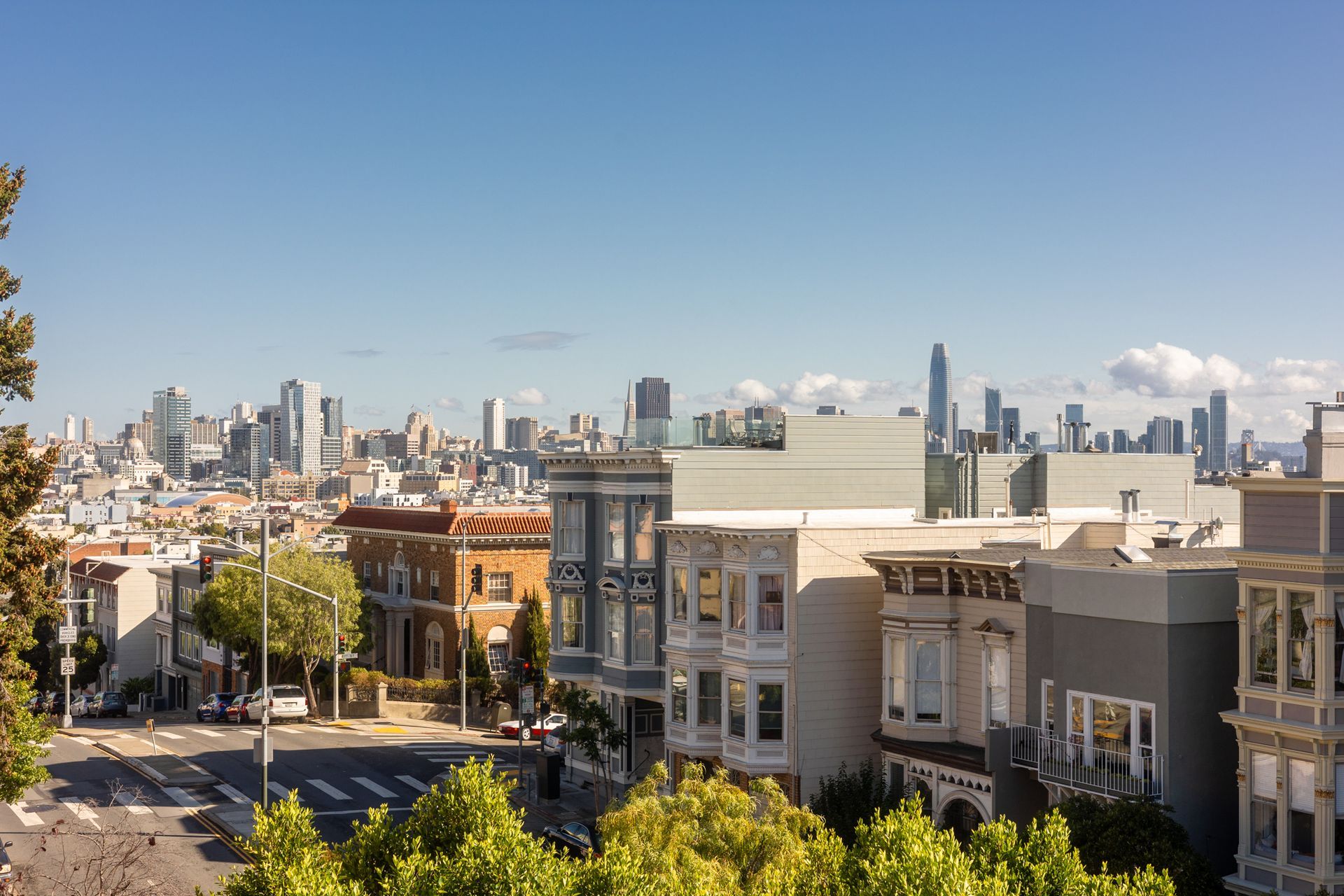
If you've been following national headlines about the rental market, you may have seen a lot of caution: slowdowns in Sunbelt cities, softening rents in some coastal markets, and economic uncertainty pushing renters to the sidelines.
San Francisco is telling a different story.
From my perspective managing leasing activity across the city, this is the most active and competitive rental environment we have seen in several years. Our team is seeing renters apply during showings, multiple qualified applicants competing for the same unit, and rents moving well above what owners expected even as recently as six months ago.
This update reflects what our team is experiencing every day — hundreds of showings, applications, and completed leases across neighborhoods, unit types, and price points. Here is what that data is telling us as we head into summer...
What's Driving This Market
Several forces have converged at once, and understanding them helps explain why the SF rental market is running counter to national trends.
AI hiring is creating measurable, sustained demand. Across the city, we are seeing a wave of highly qualified renters in AI and tech roles — often relocating from other markets, frequentlywith company relocation coordinators calling our team directly to help find housing. This is not anecdotal: Zumper's April 2026 National Rent Report identified AI-driven hiring and the broader tech sector resurgence as primary forces behind San Francisco's rent surge, noting the city now leads the entire nation in year-over-year rent growth.
Return-to-office mandates are compressing demand back into the city. Remote flexibility, which previously allowed some renters to trade the Bay Area for more affordable markets, is narrowing. More people need to be here, and they are making housing decisions accordingly. We also see a lot of people who moved away from SF moving back because they miss the city and its amenities. Office foot traffic in San Francisco rose more than 11% year-over-year in late 2025, according to Placer.ai data, showing how the demand for the city is genuinely shifting back.
There is essentially no new supply coming online. Multifamily construction in San Francisco is expensive, slow, and severely limited by permitting constraints. The result is that demand is rising in a market with essentially fixed inventory — a condition that structurally favors landlords.
The combined effect is a market that rewards preparation and punishes hesitation. Owners who are pricing based on current data, presenting their units well, and moving decisively are achieving strong results. Those anchoring to pricing expectations from just a few years ago are finding the gap to be significant.
Pricing Signals We're Seeing Across the City
The headline numbers tell part of the story, and they are striking. According to Zumper's April 2026 National Rent Report (published April 28, 2026), the average San Francisco one-bedroom rent rose 14% year-over-year to $3,755, while two-bedrooms are up 20% to $5,331. Both figures are all-time highs in Zumper's data. The citywide median across all unit types is now approaching $4,000 per month, with a vacancy rate near 3% — close to a decade low.
But what our leasing team sees day-to-day is more nuanced than any index can capture:
- Well-priced units in strong neighborhoods are leasing in a week on average. Outliers (units sitting 60 to 90 days) are almost exclusively mispriced or face specific neighborhood challenges.
- Multiple-offer situations are increasingly common and are no longer confined to premium buildings or the most sought-after neighborhoods. We are seeing competitive bidding in areas we would not have expected 12 months ago.
- Q1 saw many units lease at $200–$300 above asking. In Q2, that figure is already moving toward $400–$500 above asking in the most competitive buildings and neighborhoods.
- Price per square foot is pushing toward $8 for well-positioned units, a figure institutional investors in particular are tracking closely.
- One important note on interpreting speed of lease: days-on-market data reflects a range of owner goals and strategies. Some owners prioritize finding the exact right tenant over moving quickly. Others want the vacancy filled as fast as possible. Our leasing approach is tailored to each owner's priorities, so though speed is a signal, it is not the only metric that matters.
"In 6 years of leasing in this city, I've never seen renters move this decisively. They come to showings with their applications ready, their references lined up, and their checkbooks open. The hesitation that defined 2022 is completely gone." —Megan Henderson, GRE Leasing Manager
Regulatory Updates
San Francisco’s regulatory environment moves quickly. Below are some updates which may be relevant to your property this quarter.
- Allowable rent increases updated to 1.6%: The SF Rent Board set the new annual allowable increase at 1.6% for March 2026–February 2027, up slightly from last year's 1.4%. If you're planning to implement an increase on a covered unit, 30-day written notice is required — reach out to your property manager with any questions.
- AB1157 did not pass (for now): A bill that would have tightened statewide rent caps and extended rent control to single-family homes and condos failed in the California legislature in February. Owners of those property types can breathe easy for now — though the proposal is expected to return in future sessions.
- AB 628 means new appliance requirement is now in effect (as of Jan 2026): California law requires every rental unit to include a functioning stove and refrigerator as a baseline habitability standard. If any of your units are missing either, this is a compliance item to address now.
- SF has
strengthened displaced renter protections: San Francisco passed legislation requiring developers to provide qualifying lower-income tenants with up to 3.5 years of rental assistance when displaced by demolition, fire, or major renovations. If you're planning significant work on a property, talk to your property manager before you start.
Neighborhood Breakdown — Where It's Hot
The strongest markets we're seeing heading into Q2 include Marina, Pacific Heights, North Beach, Potrero Hill, Dogpatch, Cole Valley, and NOPA. In several of these neighborhoods, we are struggling to find current comps at all. By the time data catches up, the market has already moved again.
A few specific examples from our recent leasing activity illustrate what is happening on the ground:
- In North Beach, rents are up approximately 47% since mid-2025, one of the most dramatic neighborhood-level surges we have seen across our portfolio. A unit near Kearny and Broadway that rented for $2,895 in early 2024 recently re-leased at $3,695. The listing was active for over four months at its prior price point; at the updated figure, the outcome was completely different.
- In Noe Valley, a home near 26th and Noe was leased within six days at $12,500 per month (March 2026) — an outcome that would have been difficult to project even a year ago. The neighborhood is up roughly 21% since mid-2025.
- In Alamo Square, a one bedroom that last listed for $3,795 in 2024 just rented for $5,595—a 47% increase in two years.
- In the Marina, a unit near Beach and Webster that rented for $2,050 in February 2021 re-leased at $3,395 in February 2026 — and was listed for just four days!
- Mission Bay stands out as a notable story this cycle. One-bedroom rents there have risen approximately 21% since mid-2024, driven directly by proximity to AI and tech campuses. Hayes Valley has also posted strong gains, up roughly 13.5% year-over-year, with limited inventory holding rents up.
"Demand isn't slowing in North Beach, and supply isn't keeping up. For renters, move fast! For owners, your vacancy won't last long.”
—Nick O'Leary, GRE Leasing Agent
Neighborhood Breakdown — Where It's Harder
SOMA and the Tenderloin continue to face leasing headwinds, and it is worth being direct about the reason. The challenge in these neighborhoods is not primarily about unit quality or amenities. It is about street-level safety and cleanliness perceptions that some renters find difficult to look past.
"We are honest with owners in SOMA and the Tenderloin: you are not competing against the Marina. You are competing against the best version of your own block. Price to your neighborhood comp, invest in your exterior, and add parking if you can — those three things change the outcome." —Lauren Rios, GRE Leasing Manager
Owners in these areas have meaningful options. Pricing to the neighborhood comp, not the city average, is essential. Adding parking where possible creates a genuine differentiator. And exterior presentation matters more in these neighborhoods than anywhere else in the city: a well-maintained entry, a clean facade, and regular upkeep send a signal that helps prospective renters mentally separate the building from the surrounding block.
One property we work with in SOMA invests approximately $40,000 per year in exterior cleaning (completed three times per week). The leasing results have been dramatically better than comparable buildings on the same street. It is an investment that pays for itself.
Who Is Renting Right Now
The renter profile has shifted considerably from even two or three years ago, and understanding this helps owners make better decisions about upgrades, pricing, and lease timing.
The SF rental market today is dominated by young professionals, primarily in the 22-to-28 age range and working in AI and tech roles, with high earning potential. The vast majority can afford to live alone and seek to do so. Studios and one-bedrooms are in highest demand; two-bedrooms are leasing well but primarily to people who want a home office, not a roommate.
Renters have also fundamentally changed their behavior. The hesitancy and negotiation that characterized the renter's market of 2021–2023 has reversed. Today renters come prepared. They have their documentation in order, they are ready to apply at or during the showing, and they move fast. As one of our agents put it recently: if a landlord cannot be reached promptly after multiple attempts, we move to the next qualified applicant. There are usually several waiting.
One demographic that has largely exited the market: families. Renting to a family in San Francisco has become rare. Owners who have historically factored family renters into their expectations should update that assumption.
What Makes a Unit Win in 2026
Across our leasing portfolio, the units that are performing best share a consistent set of characteristics. These factors are worth reviewing whether or not you have an upcoming vacancy.
- Table stakes: If a unit does not have in-unit laundry and a dishwasher, it competes at a significant disadvantage. These are no longer differentiators — they are expected.
- Differentiators: Parking, natural light, and pet-friendly policies continue to expand the applicant pool meaningfully. Pet-friendly units, in particular, open access to a segment of renters who are otherwise excluded, and that population is substantial.
- Aesthetic edge: The millennial gray era is over. Units with light, clean paint colors (such as whites like Chantilly Lace) lease faster consistently. Bright floors, updated hardware, and clean finishes signal care even in older buildings.
The difference between a "Toyota Corolla" unit (functional, dated, priced accordingly) and a "BMW" unit (with the right updates) in the same neighborhood can be $500 or more per month in rent. We see this gap play out in real time across our Marina and Pacific Heights portfolio, where nearly identical footprints in comparable buildings diverge significantly on both leasing speed and final rent based on finish quality alone.
A note on renovation strategy: if you are planning upgrades before a vacancy, call your leasing agent first. Our team will walk the unit and tell you exactly what will move the needle and what will not — before you spend a dollar. That conversation is part of how we at Gaetani support you, and it matters more than ever when the difference between a good outcome and a great one comes down to a few high-impact decisions.
Looking Ahead to Summer
Renters are already touring for July and August availability, although we are in May. Summer 2026 is shaping up to be one of the most competitive leasing seasons San Francisco has seen in years. Demand is near peak, while inventory remains historically constrained.
As our leasing team put it recently: last summer was busy. This summer has the same flood of demand, yet with historic low inventory. It could be a summer we have not seen before.
If you have an upcoming vacancy, the time to make upgrade and pricing decisions is now — not the week before the unit turns. Owners who come prepared to this summer will have significantly better options than those who wait.
If you have questions about your property's positioning, what it might command in the current market, or whether it makes sense to bring in leasing support ahead of a vacancy, our team is here for you.
Contact our leasing team or explore our current rental listings to see what is available and what the market is doing in real time.